
Designing a Winter Landscape That Actually Works in Fort Collins
Winter is when most Front Range landscapes reveal their weak spots.
Lawns go dormant. Perennials disappear. Evergreens are asked to do all the work — and increasingly, many of them are under stress. What’s left can feel bare, brittle, or unfinished.
But winter doesn’t have to be empty.
A well-designed landscape in Fort Collins and across the Front Range holds structure, texture, and life even in January. It doesn’t rely on flowers to feel beautiful. Instead, it uses plants that are adapted to our climate, our soils, and our long seasons of dormancy.
This is the kind of winter garden I design — one that feels intentional, resilient, and alive even when everything else is resting.
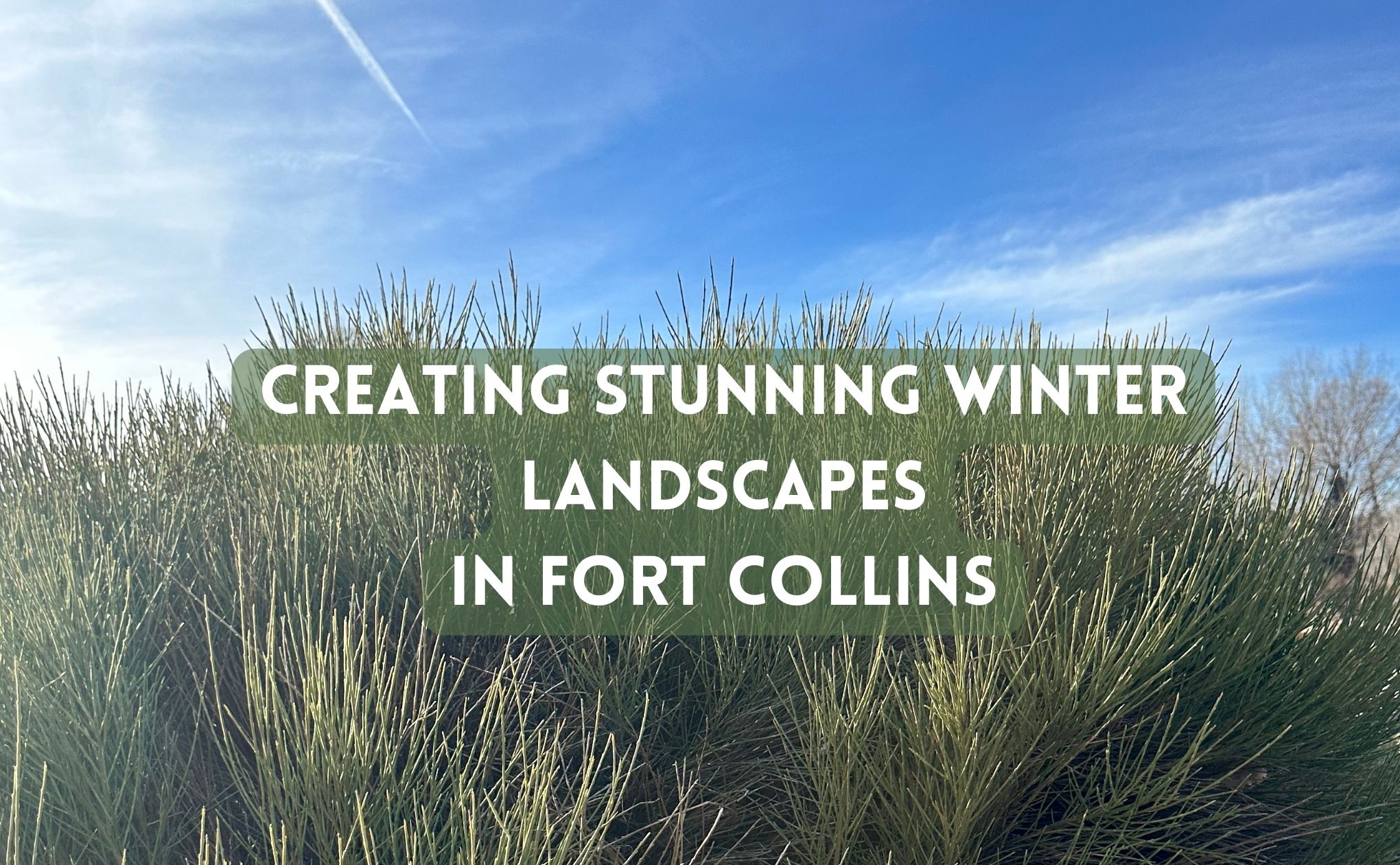
Winter Color Looks Different — and That’s the Point
Winter color isn’t about brightness. It’s about contrast, form, and subtle shifts.
Instead of blooms, we look for:
Bark that glows in low light
Seed heads that catch frost and snow
Foliage that shifts to bronze, blue, or silver
The quiet interplay between plants, stone, and soil
When these elements are layered thoughtfully, the garden doesn’t disappear in winter — it settles.
Trees & Large Structure (Beyond Pines)
For decades, Front Range landscapes have relied heavily on pines and spruces for winter structure. While evergreens still have a place, extended drought, temperature swings, and pest pressure — including pine beetles, needle cast, and tip blight — have made overreliance on them risky.
A more resilient approach is diversifying structure.
Trees That Hold Form and Presence in Winter
Regal Prince® Oak (Quercus × warei)
A narrow oak that often holds its leaves through winter, offering vertical structure and privacy without evergreen disease pressure.Serviceberry (Amelanchier spp.)
Elegant branching in winter, early spring flowers, edible berries, and excellent fall color.Hawthorn (Crataegus spp.), including Russian hawthorn
Strong branching, persistent fruit, and exceptional toughness in Front Range conditions.Eastern white pine (Pinus strobus)
Used sparingly and intentionally, it adds soft texture and movement that contrasts beautifully with grasses and shrubs.
Evergreens still matter — but they shouldn’t be asked to carry the entire landscape alone.
Shrubs, Groundcovers & Perennials That Carry the Winter Garden
The most successful winter landscapes layer shrubs, groundcovers, and hardy perennials that each contribute form, texture, or color when the garden is dormant.
Woody Plants & Groundcovers with Winter Presence
Fernbush (Chamaebatiaria millefolium)
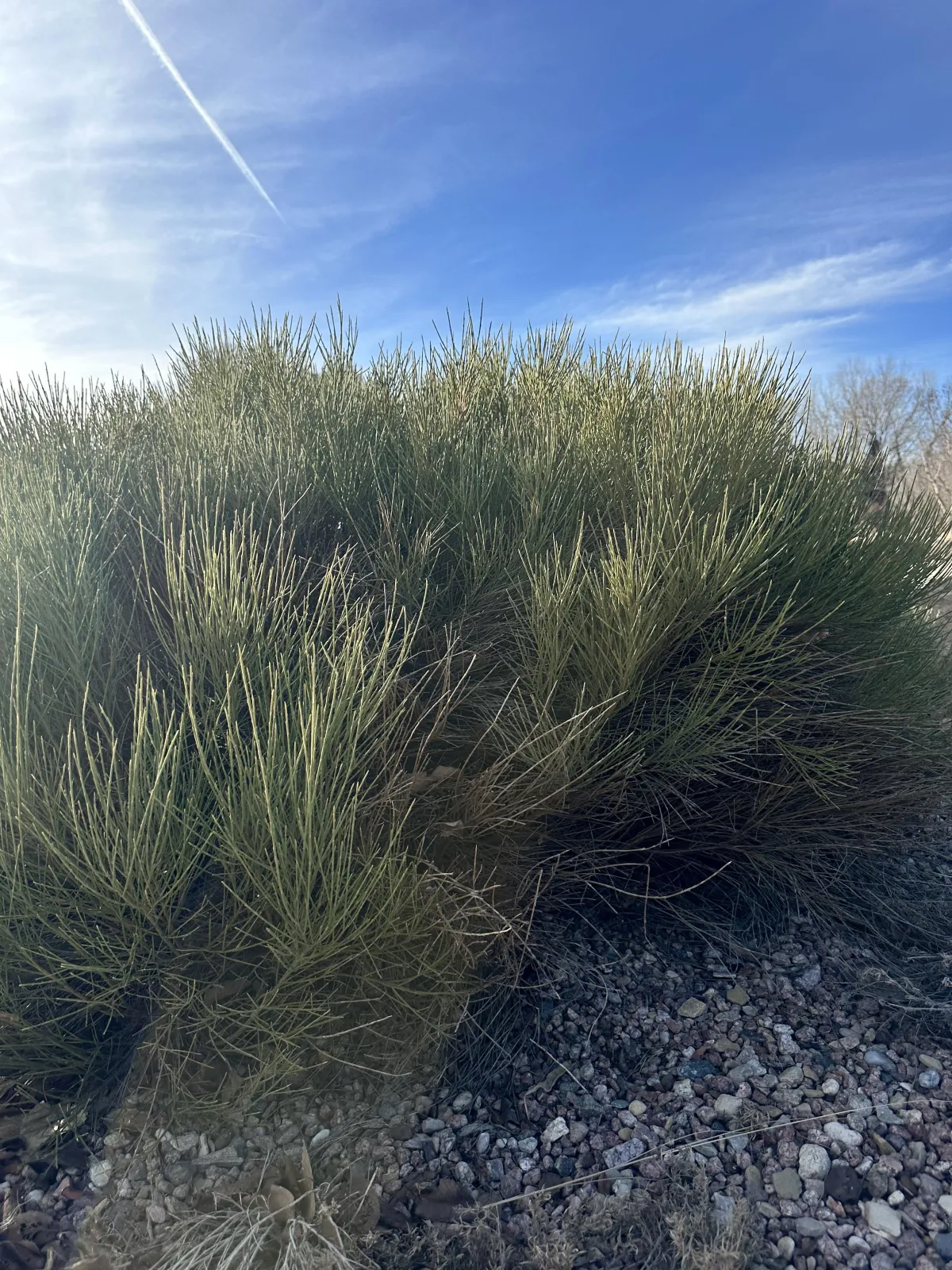
A native shrub with soft texture that holds shape through winter.Mormon tea (Ephedra viridis)
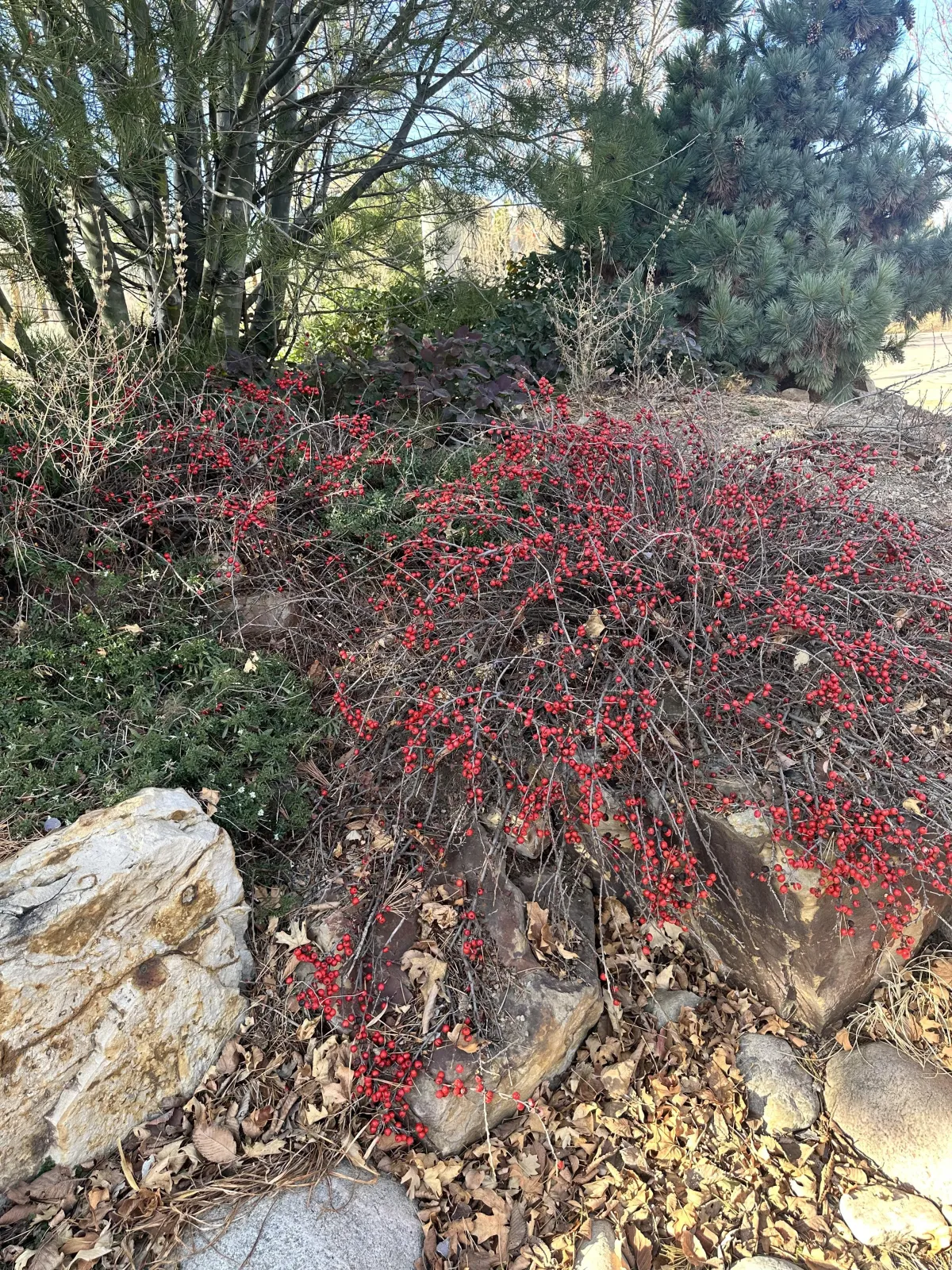
Sculptural branching that reads beautifully against snow and stone.Rockspray cotoneaster (Cotoneaster horizontalis)
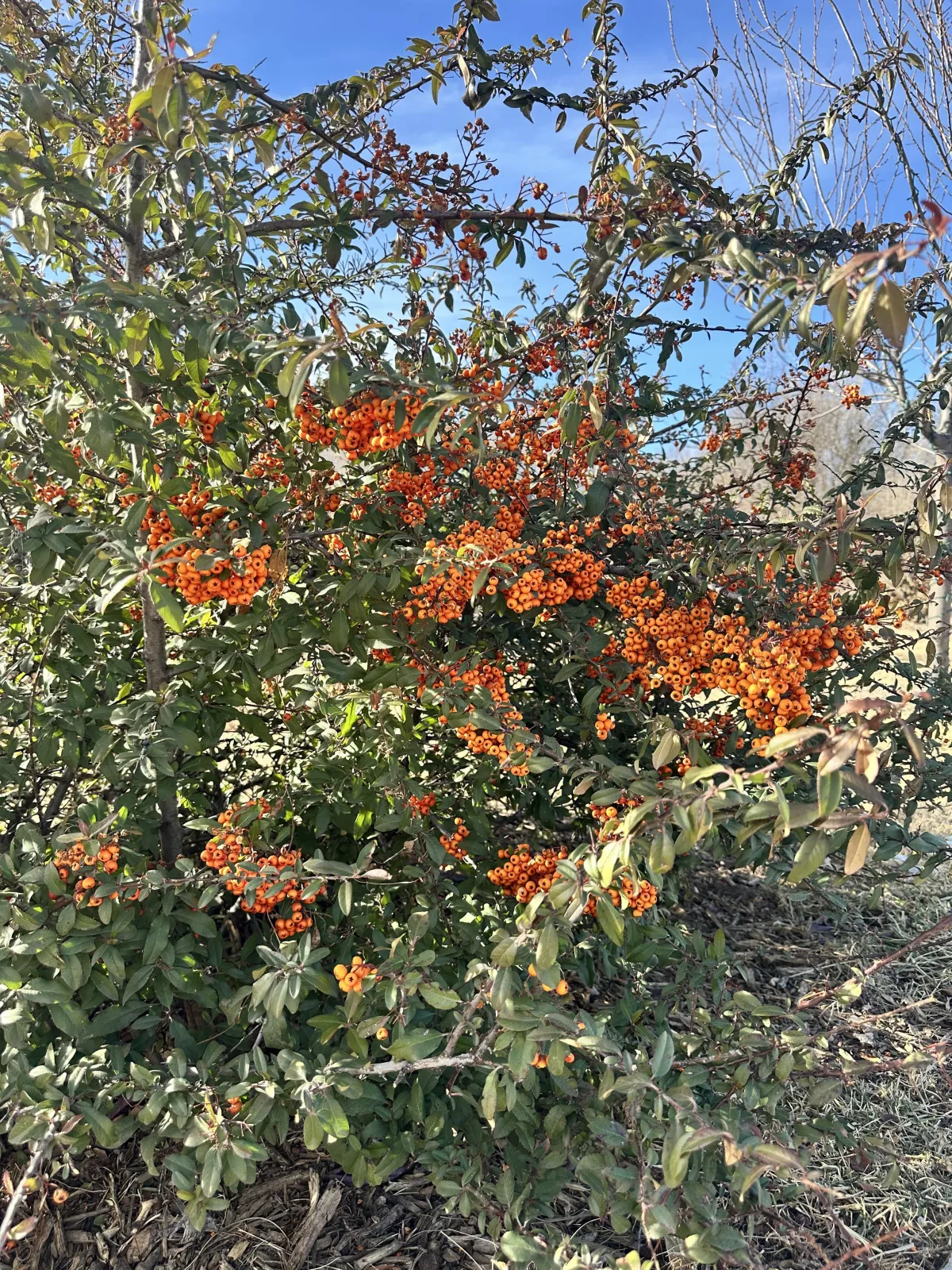
Distinctive herringbone branching with persistent red berries.Scarlet firethorn (Pyracantha coccinea)
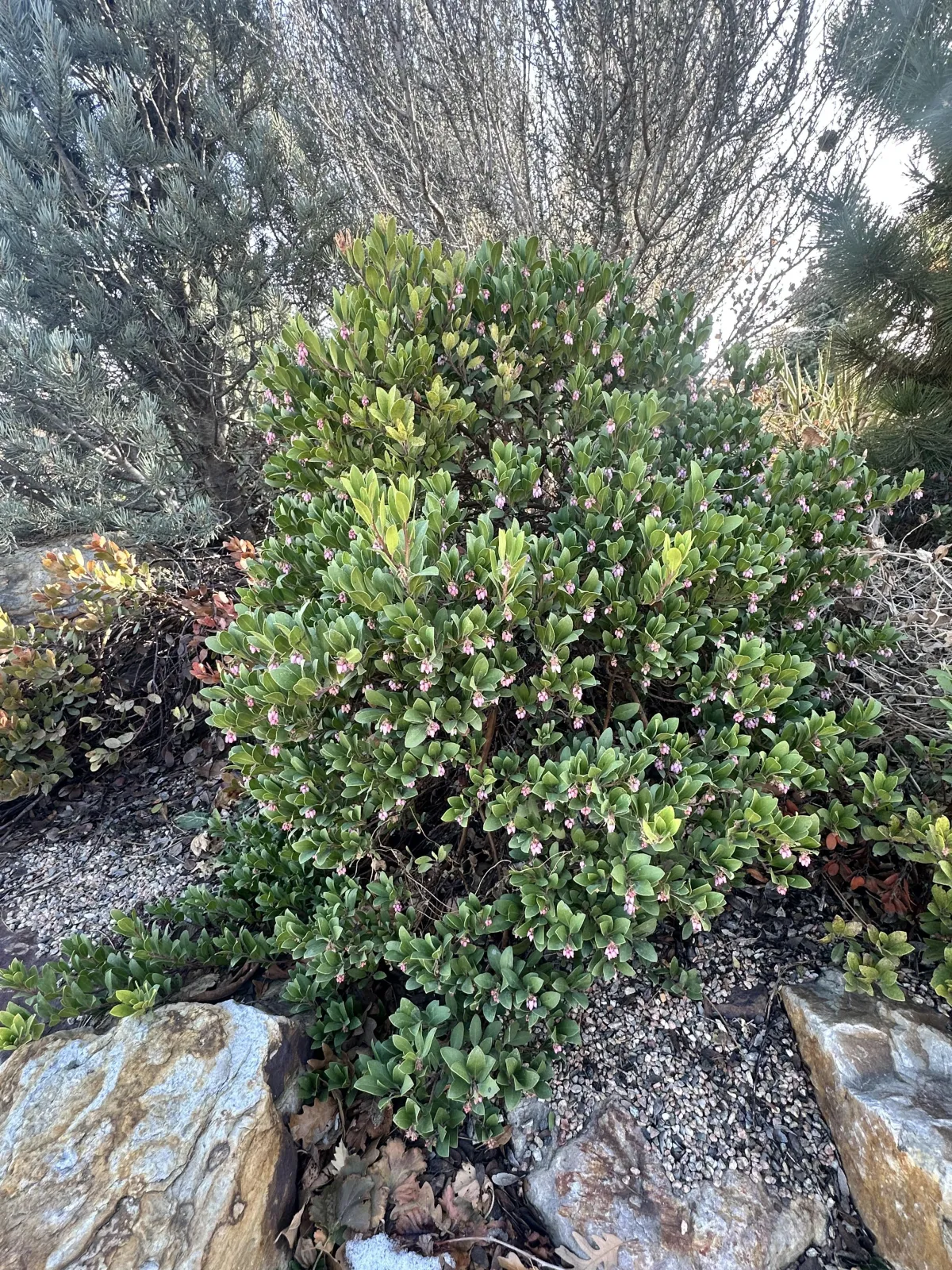
Evergreen to semi-evergreen structure with bold winter berries.Kinnikinnick (Arctostaphylos uva-ursi)
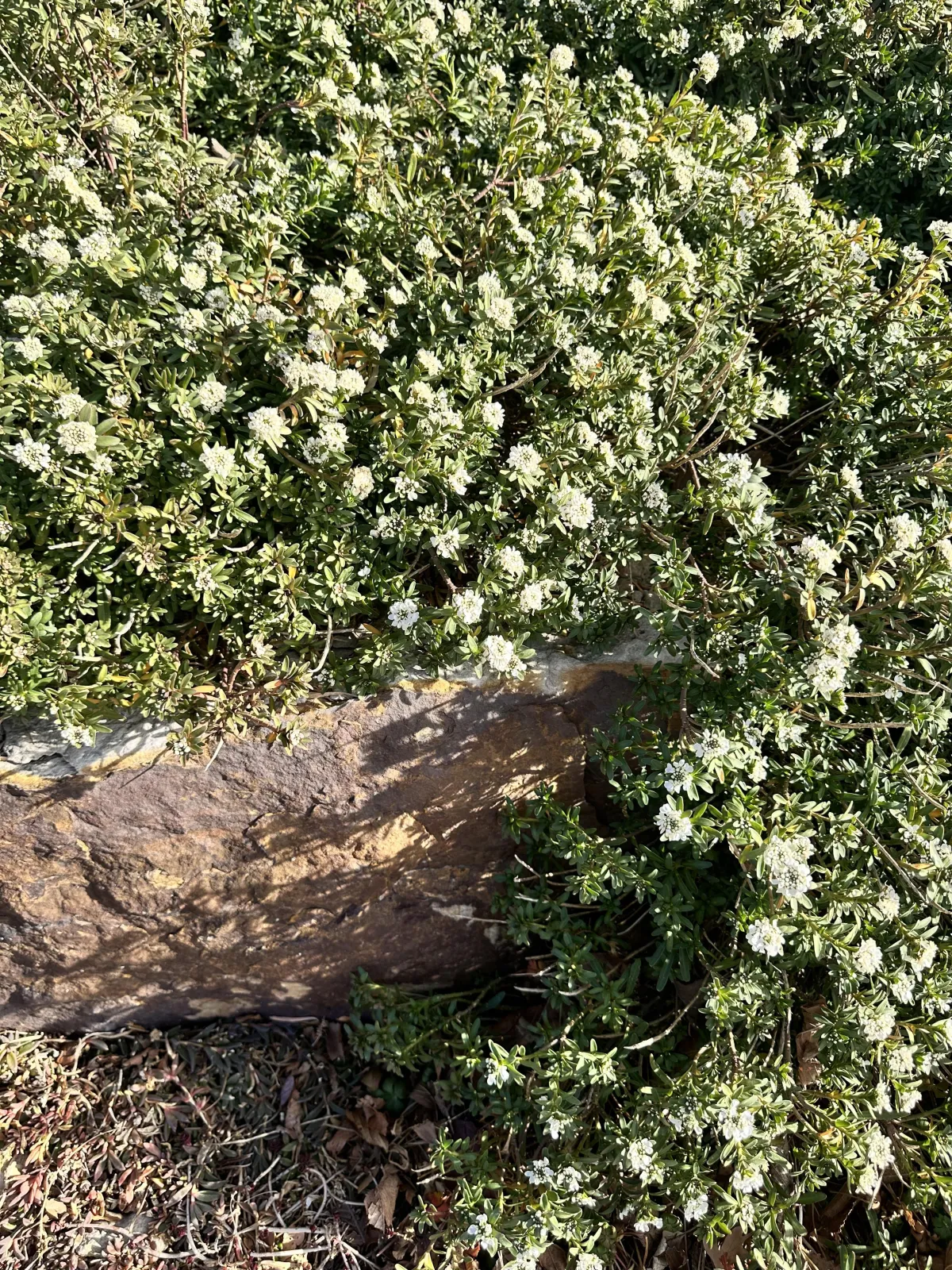
Low evergreen groundcover with glossy leaves and red berries, excellent for slopes.Candytuft (Iberis sempervirens)
A reliable evergreen groundcover that keeps its form through winter.
Perennials That Hold Texture & Seed Heads
Sulphur buckwheat (Eriogonum umbellatum)
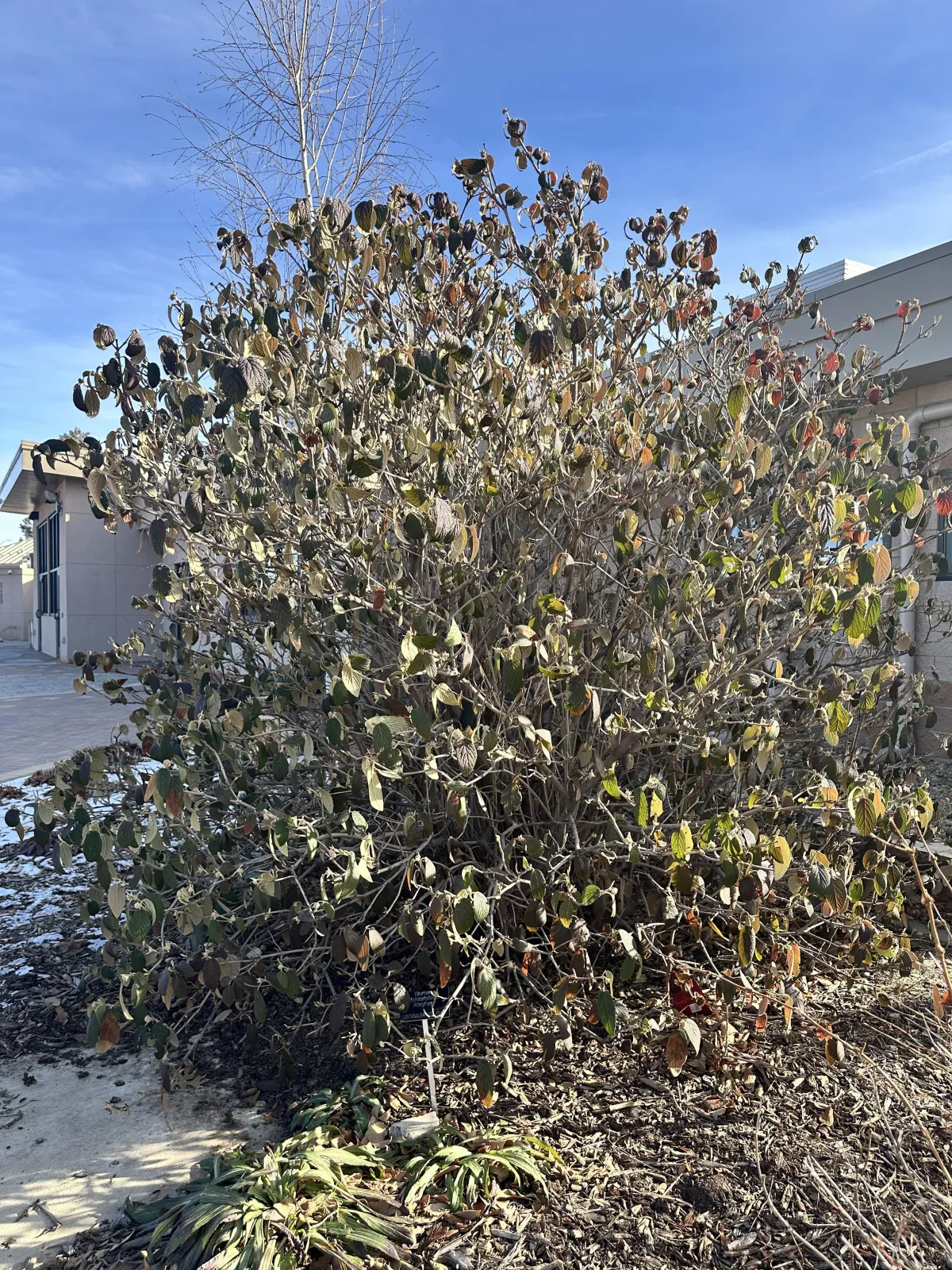
Evergreen foliage and persistent seed heads with strong ecological value.Virburnum ('Allegany')
Reaching 8' in height this shrub holds on to most of its dark leathery leaves through the winter.Roses with persistent hips (rugosa and shrub roses)
Large hips provide bold color and winter wildlife support.
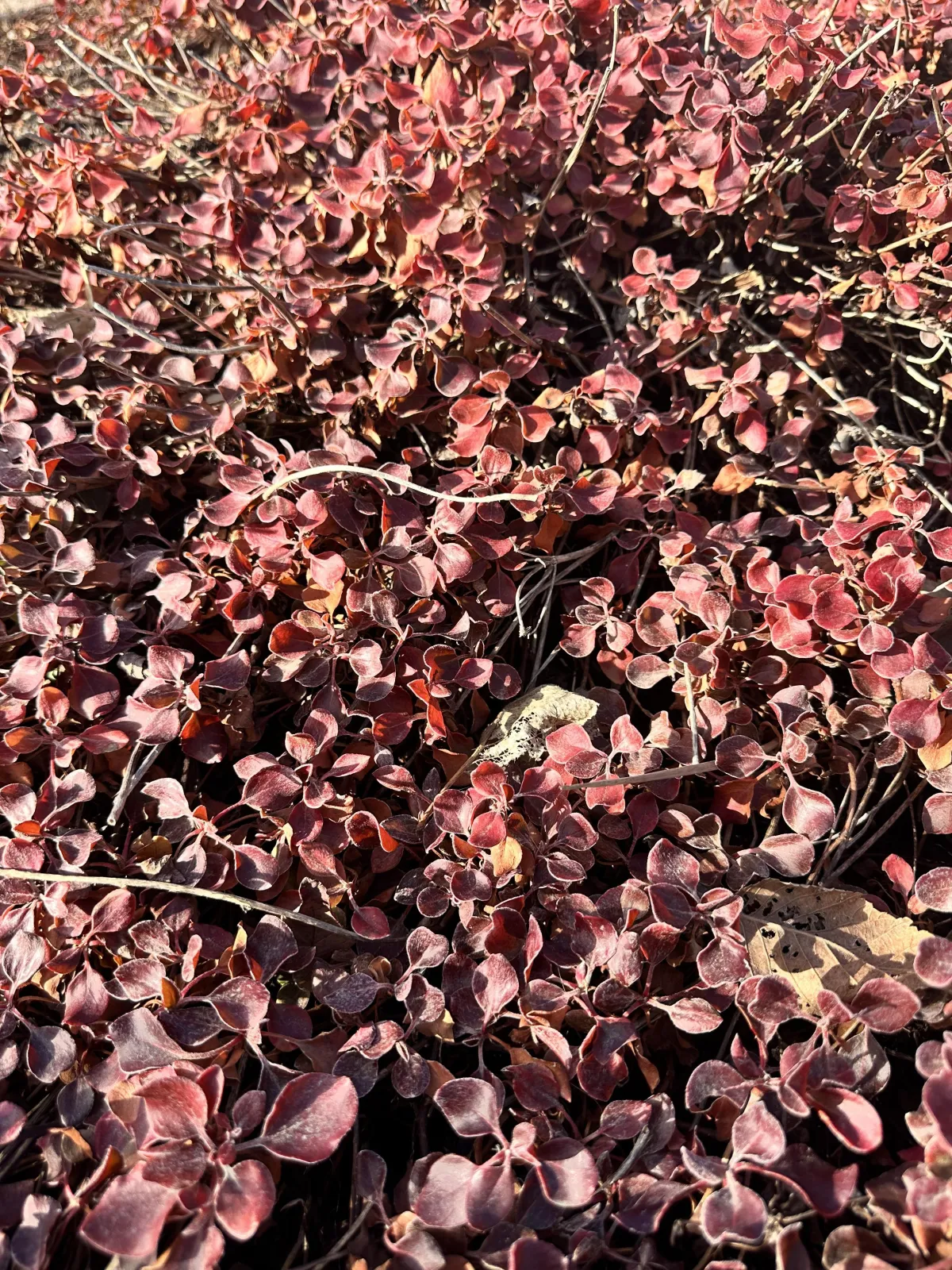
Check out these photos taken at Gardens on Spring Creek in Fort Collins in January.
Grasses: The Quiet Backbone of Winter Design
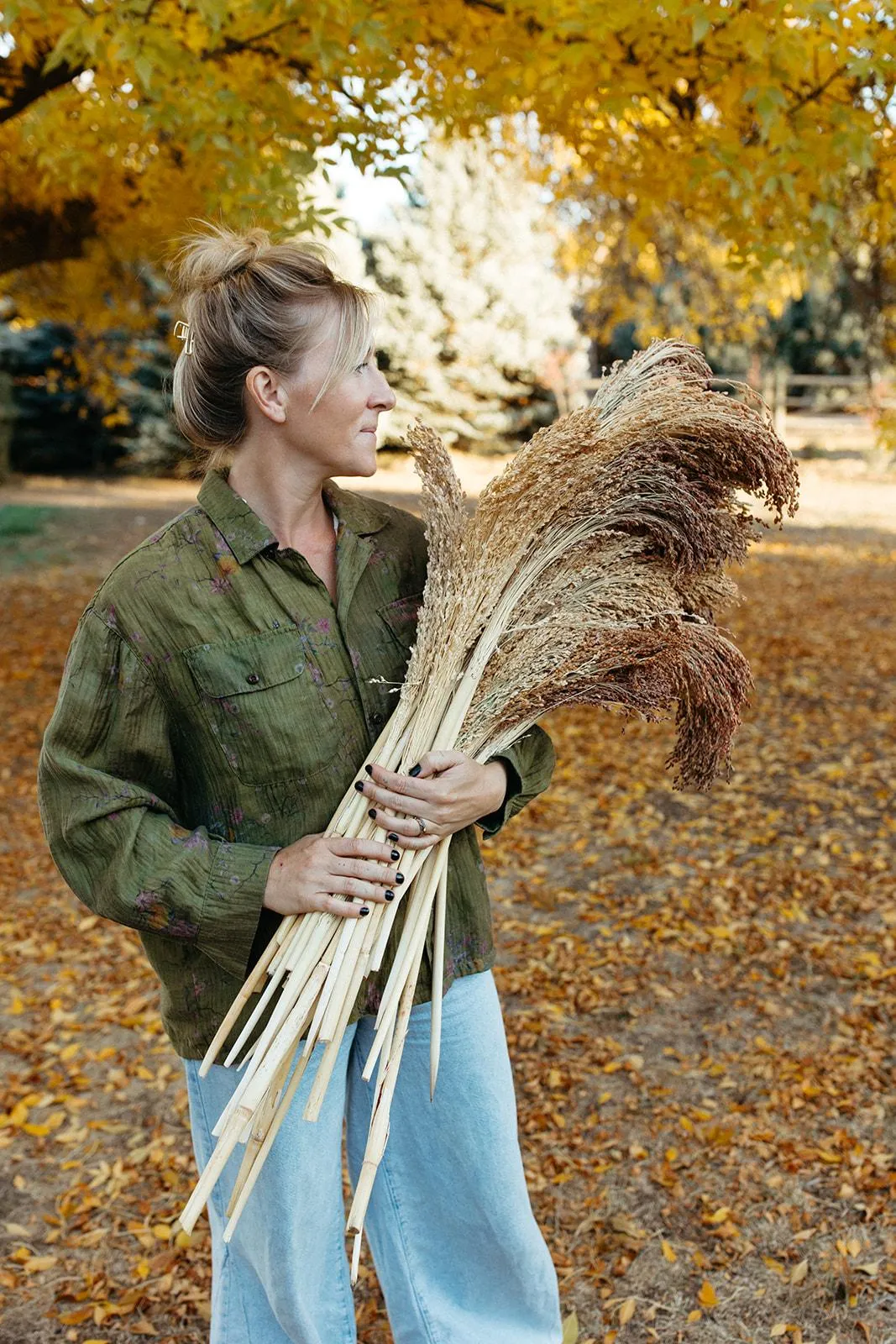
Grasses are one of the most underused tools in Front Range landscapes.
When left standing through winter, they:
Catch snow and frost beautifully
Add movement on windy days
Soften hard edges
Support overwintering insects and birds
Reduce the need for evergreen overuse
Grasses That Hold Structure Through Winter
Little bluestem (Schizachyrium scoparium)
Switchgrass (Panicum virgatum)
Prairie dropseed (Sporobolus heterolepis)
Blue grama (Bouteloua gracilis)
Karl Foerster feather reed grass (Calamagrostis × acutiflora)
Grasses work best when cut back in late winter, not fall — a simple shift that dramatically improves winter interest.
How I Design Differently Than Most Landscapers
Most landscaping focuses on what gets installed.
My work focuses on how the garden lives over time.
That means:
Designing for all four seasons, not just summer
Matching plants to real soil, water, and maintenance capacity
Leaving plants standing when they serve the garden
Reducing future work instead of adding to it
Teaching clients how to read and tend their landscape seasonally
I work as a garden coach and designer, not just an installer. The goal isn’t a finished look — it’s a garden that becomes more resilient, beautiful, and manageable each year.
A Winter Garden Is a Long-Game Garden
Winter reminds us that gardens aren’t meant to perform constantly.
They rest. They hold. They wait.
When we design with that truth in mind, we create landscapes that feel grounded and intentional — even in February.
If you’re looking for help rethinking your garden for year-round structure, seasonal care, or long-term planning in Fort Collins or across the Front Range, this is exactly the kind of work I do.
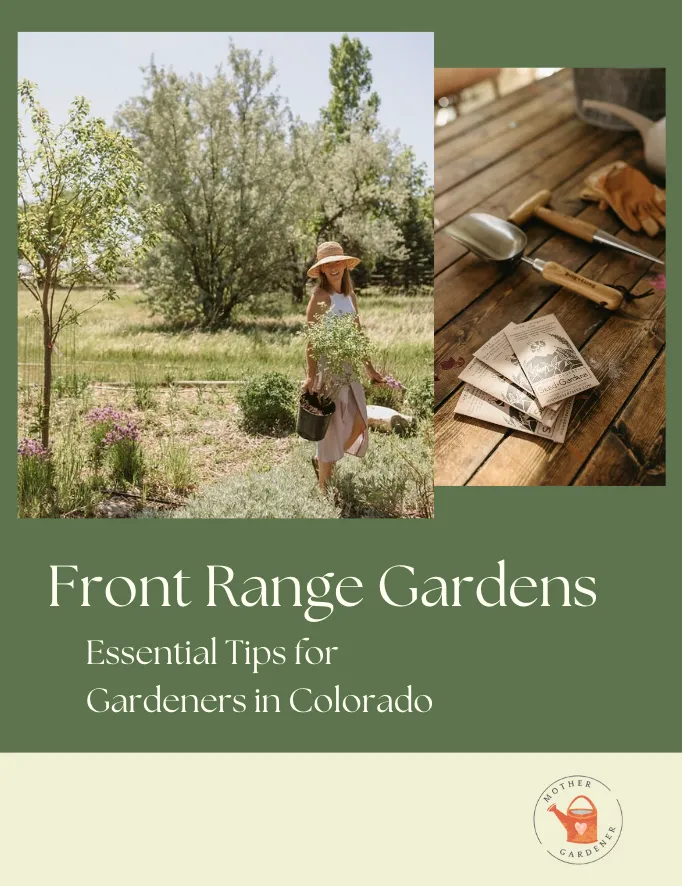
Get Your Free Front Range
Gardening Guide
Unlock the Secrets to Colorado Garden Success
Ready to grow with confidence in Colorado’s unique climate?
Get your free guide packed with everything you need to succeed. From understanding local growing conditions to mastering seasonal tasks and a list of local gardening resources, this resource is perfect for both beginners and seasoned gardeners.
Start building a garden that thrives today—grab your free guide now!


Read more over on my Substack: Mother Gardener Membership Society

Contact:
support@mothergardener.com
Fort Collins, Colorado
80524