Planting calendar
Fort Collins planting calendar: what to plant, tend and harvest this week
Some links on this page are affiliate links. If you buy through them, I may earn a small commission at no extra cost to you, and you often get a discount. I only share things I use and trust.
Fort Collins is Zone 5b. Plan on a last spring frost around May 10, but know that 3 of the last 10 springs froze after May 20, and fall frost has been arriving later, mostly mid to late October since 2021. Cool-season crops go in from late March, tomatoes and peppers in late May, and fall greens in August. Enter your ZIP code below to shift the calendar to your own frost dates.
Showing Fort Collins, Colorado (Zone 5b).
The calendar is written for Fort Collins and shifts to match the frost dates where you live. Frost history from NOAA climate data via the Regional Climate Centers (ACIS), live forecast from the National Weather Service, ZIP lookup by Zippopotam.us and zone by the PRISM hardiness map. Always check your own forecast before planting.
Get this in your mailbox. Every month The Gardener's Post brings a handmade tending list for the season you're in, written from my Fort Collins garden, so you know what to do before it's time.
Fort Collins frost dates and growing season
Fort Collins sits at about 5,000 feet in USDA Zone 5b. Based on NOAA's 1991 to 2020 climate normals for the Fort Collins station, the average last spring frost is around May 7 and the first fall frost around October 2, for a growing season of roughly 147 days. Colorado State University Extension's Front Range planting guides use May 10 and October 1 or 10.
What the last 10 years actually looked like
Averages hide a lot. Here's the real last spring freeze and first fall freeze (32°F or colder) at the Fort Collins weather station on the CSU campus:
| Year | Last spring freeze | First fall freeze |
|---|---|---|
| 2026 | May 7 | October 16 |
| 2025 | April 20 | October 19 |
| 2024 | April 22 | October 25 |
| 2023 | April 24 | October 14 |
| 2022 | May 22 | October 17 |
| 2021 | May 11 | October 14 |
| 2020 | April 19 | September 8 |
| 2019 | May 21 | October 7 |
| 2018 | April 25 | October 10 |
| 2017 | May 20 | October 3 |
| 2016 | May 2 | October 20 |
Two things jump out:
- Spring is a coin toss, with a long tail. Half of recent springs were frost-free by late April, but three of the last ten froze after May 20. Snow in late May is real here too: 5.8 inches fell on May 18, 2017, 2.7 inches on May 21, 2019, and the record books show snow as late as May 25 (1950) and even June 7 (2009). That's why I wait until the last week of May for tomatoes, peppers and basil.
- Fall frost is coming later. Every year since 2021 made it to mid-October or later before the first freeze, about two weeks past the long-term average. The 2020 freeze on September 8, with the earliest snow on record, is the reminder that it isn't guaranteed. Keep frost cloth handy in September, and enjoy the bonus weeks of tomatoes and fall greens when they come.
The calendar tool above uses these recent years: it plans with a last-frost date that's later than 7 of the last 10 springs, and a first-frost date that's earlier than 7 of the last 10 falls. Enter your ZIP code and it does the same math for your location.
Watch the forecast, keep row cover handy, and use soil temperature as your real guide.
New to gardening here? Start with my Fort Collins gardening guide for beginners.
When to plant vegetables in Fort Collins
CSU Extension groups vegetables by how much cold they can take:
- Hardy (2 to 4 weeks before last frost, late March to mid-April): peas, spinach, lettuce, radishes, onions, turnips, kohlrabi, and broccoli and cabbage transplants.
- Semi-hardy (0 to 2 weeks before last frost, late April to early May): beets, carrots, Swiss chard, parsnips, parsley and potatoes (soil at 45°F).
- Tender (around the last frost, early to mid-May): beans and corn, once the soil is 50 to 55°F.
- Very tender (2 weeks after last frost, late May): tomatoes, peppers, eggplant, squash, cucumbers and melons, when days stay above 55°F and the soil is near 60°F.
For a fall harvest, direct seed broccoli, cabbage and cauliflower in early July, and sow lettuce, spinach and radishes again in August.
When to start seeds indoors in Fort Collins
Count back from when each crop goes outside:
| Crop | Start indoors | Plant outside |
|---|---|---|
| Onions and leeks | February | Early April |
| Broccoli, cabbage, kale | Early March (5 to 7 weeks) | Mid April, under cover |
| Eggplant | Mid March (6 to 9 weeks) | Late May |
| Peppers | Late March (6 to 8 weeks) | Late May |
| Tomatoes | Early April (5 to 7 weeks) | Late May |
| Basil and holy basil (tulsi) | Early April | Late May |
| Squash, cucumbers, melons | Late April (2 to 3 weeks), or sow outside | Late May |
Where I buy seeds and supplies
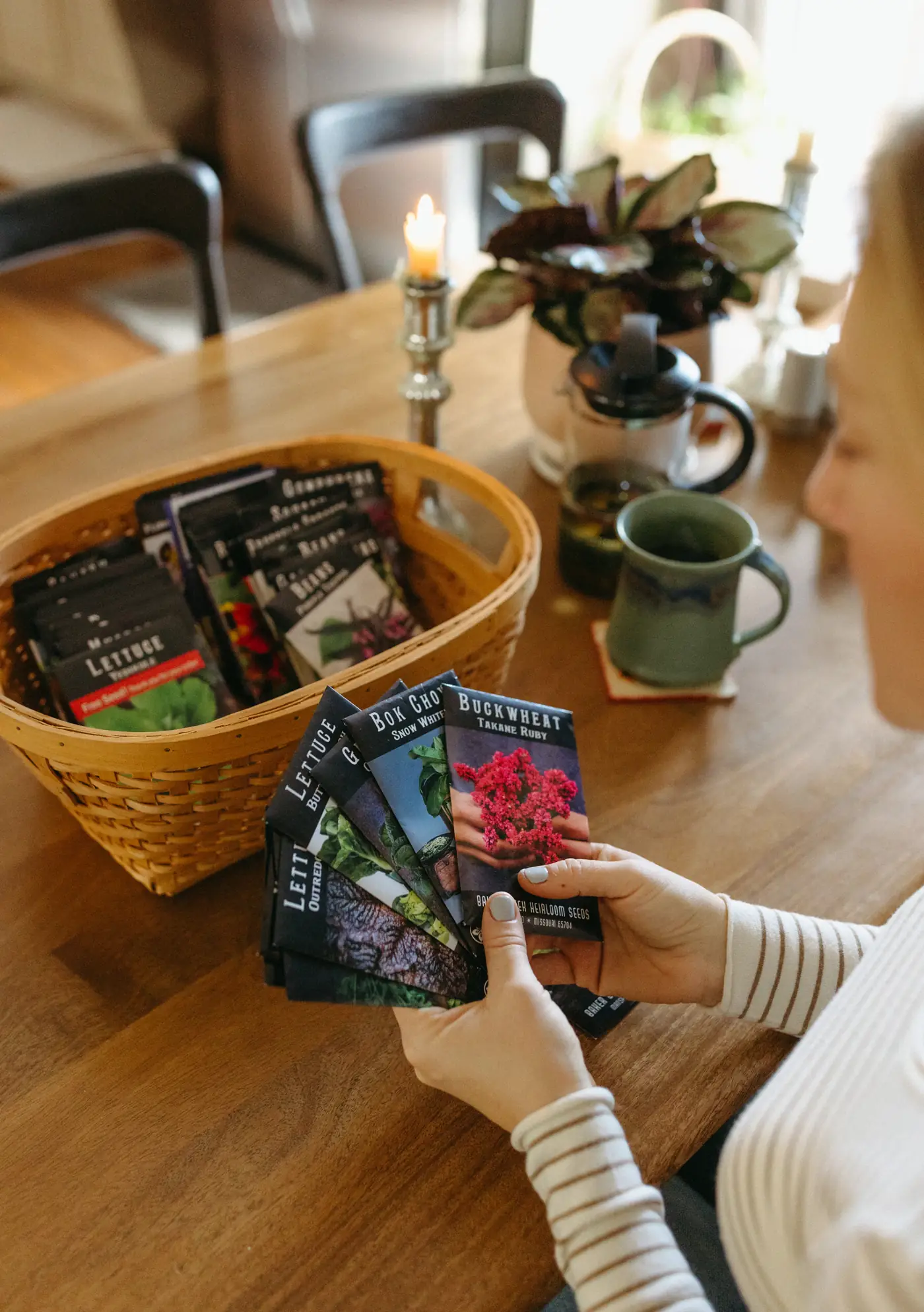
- Seeds: I love Botanical Interests, a Colorado seed company in Broomfield whose varieties do well in our short, high-altitude season. My link gives you a one-time 5% off code at checkout.
- Seed starting and raised bed supplies: Epic Gardening. Use code MOTHERGARDENER for 5% off.
Fort Collins planting calendar, month by month
Early January
Tend: Order seeds and take stock of last year's seed; Water trees, shrubs and perennials on a mild day (above 40°F) when the ground isn't frozen and there's been no snow for a few weeks; Brush heavy snow off evergreen and shrub branches.
Harvest: Winter-sown greens under cover; Stored garlic, onions, squash and potatoes.
Late January
Plant or sow outside: Winter sow hardy natives and herbs in milk jugs outside (yarrow, echinacea, anise hyssop, penstemon).
Start indoors: Onions and leeks from seed (about 16 weeks before last frost).
Tend: Sketch this year's garden plan and crop rotation; Check stored bulbs, roots and squash for rot; Keep up winter watering every 3 to 4 dry weeks.
Harvest: Stored crops; Cottonwood buds for salves begin to swell late in the month.
Early February
Plant or sow outside: Keep winter sowing hardy perennials and cool-season greens in jugs.
Start indoors: Onions and leeks if not started.
Tend: Set up grow lights and clean seed trays; Prune fruit trees and summer-blooming shrubs while dormant.
Harvest: Cottonwood buds, before they open.
Late February
Start indoors: Celery and artichoke (they need longer than you think); Shallots if not started; Hardy perennial herbs that are slow to start: thyme, oregano, lavender.
Tend: Pot up onion seedlings and give them a haircut at 4 inches; Plan where your warm-season crops will go.
Harvest: Cottonwood buds.
Early March
Plant or sow outside: Peas and spinach can go in on warm spells if the soil is workable and at least 40°F.
Start indoors: Broccoli, cabbage, cauliflower and kale (5 to 7 weeks before planting out); Lettuce for early transplants; Eggplant (6 to 9 weeks before planting out).
Tend: Cut back ornamental grasses and last year's perennial stems now, not in fall; Pull back winter mulch from early bulbs; Test your soil before you add anything.
Harvest: Overwintered spinach and kale.
Late March
Plant or sow outside: Peas; Spinach; Radishes; Onion sets; Lettuce and other salad greens under row cover.
Start indoors: Peppers (6 to 8 weeks before planting out); Eggplant if not started; Calendula and chamomile for early transplants (or direct sow in April).
Tend: Clean and sharpen tools; Top-dress beds with a thin layer of compost only if your soil test says so; Watch for spring snow and keep row cover handy.
Harvest: Overwintered greens; Horseradish roots before new growth starts; First nettle shoots in sheltered spots.
Early April
Plant or sow outside: Peas, spinach, lettuce, radishes, turnips and kohlrabi; Onion sets and transplants; Transplant broccoli, cabbage and kale under cover (2 to 4 weeks before last frost).
Start indoors: Tomatoes (5 to 7 weeks before planting out); Basil and holy basil (tulsi); Peppers if not started.
Tend: Harden off cool-season seedlings for a week before planting out; Divide crowded perennials as they wake up; Start a weed-pulling habit while weeds are small.
Harvest: Young nettle (with gloves); Dandelion greens; Chives.
Late April
Plant or sow outside: Beets, carrots, parsnips and Swiss chard (0 to 2 weeks before last frost); Potatoes once soil reaches 45°F; Direct sow calendula, chamomile, cilantro and dill; More lettuce, spinach and radishes every 2 weeks.
Start indoors: Squash, cucumbers and melons late in the month (only 2 to 3 weeks before planting out); Tomatoes if not started.
Tend: Keep row cover handy: late April snow is normal on the Front Range; Set up drip irrigation and check for leaks; Mulch perennial beds.
Harvest: Spinach, radishes and early lettuce; Nettle, dandelion and chickweed; Asparagus begins.
Early May
Plant or sow outside: Potatoes; Beans and corn around the average last frost (about May 10) once soil is 50 to 55°F; More carrots, beets and greens; Perennial herbs: thyme, sage, oregano, lavender, yarrow, anise hyssop.
Tend: Watch the forecast: wait to plant tomatoes and peppers until nights stay above 50°F; Harden off warm-season transplants for 7 to 10 days; Thin carrots, beets and greens.
Harvest: Spinach, lettuce, radishes, green onions; Asparagus and rhubarb; Nettle before it flowers.
Late May
Plant or sow outside: Tomatoes, peppers and eggplant (about 2 weeks after last frost, when days stay above 55°F); Squash, cucumbers, melons and pumpkins (soil at 60°F); Basil and holy basil; Nasturtiums and sunflowers.
Tend: Use walls of water or row cover if a cold night sneaks in; Stake or cage tomatoes at planting; Mulch once soil has warmed.
Harvest: Salad greens, spinach, radishes, peas begin; Chives and early thyme; Lilac and violet flowers for syrups.
Early June
Plant or sow outside: Succession sow beans, carrots and beets; Transplant any last warm-season crops; Sow heat-tolerant greens in afternoon shade.
Tend: Water deeply and less often, early in the morning; Hail season: have row cover or shade cloth ready; Pinch basil and tulsi to keep them bushy.
Harvest: Peas, lettuce, spinach before it bolts; Lemon balm, mint and oregano before flowering; First calendula and chamomile flowers; Yarrow begins to bloom.
Late June
Plant or sow outside: Succession sow beans and cucumbers; Start fall broccoli and cabbage indoors or in a shady flat.
Start indoors: Fall cole crops (broccoli, cabbage, kale) for transplanting in late July.
Tend: Side-dress heavy feeders with a nitrogen source like alfalfa meal; Check squash for squash bugs and eggs; Keep picking calendula and chamomile so they keep blooming.
Harvest: Garlic scapes; Peas, early beets, kohlrabi; Calendula, chamomile, yarrow, St. John's wort near the solstice; Linden flowers.
Early July
Plant or sow outside: Direct seed fall broccoli, cabbage and cauliflower (early July on the Front Range); Bush beans for a last crop; Carrots and beets for fall.
Tend: Shade cloth over lettuce and young seedlings in heat waves; Keep tomatoes evenly watered to prevent blossom end rot; Deadhead annual flowers.
Harvest: Garlic when the lower third of leaves brown; Zucchini (check daily!), cucumbers, beans; Lavender as buds open; Basil, tulsi and mint before flowering.
Late July
Plant or sow outside: Transplant fall cole crops; Sow kale, chard and fall carrots.
Tend: Cure garlic in a dry, shady spot; Water consistently through the hottest weeks; Save seed from early lettuce and cilantro.
Harvest: Beans, squash, cucumbers, first tomatoes; Calendula, chamomile, bee balm and echinacea flowers; Coriander seed.
Early August
Plant or sow outside: Lettuce, spinach, arugula, radishes and Asian greens for fall; Turnips and kohlrabi.
Tend: Order garlic for fall planting; Remove spent crops and add to compost; Watch for powdery mildew on squash.
Harvest: Tomatoes, peppers, beans, squash, sweet corn; Elderberries as they ripen (cook before eating); Sumac clusters; Herbs for drying.
Late August
Plant or sow outside: More fall greens and radishes; Spinach to overwinter under cover.
Tend: Pinch off new tomato flowers that won't ripen before frost; Collect and dry seed from favorite flowers and herbs.
Harvest: Tomatoes, peppers, eggplant, melons; Hawthorn berries begin; Fennel and dill seed.
Early September
Plant or sow outside: Last sowing of spinach and lettuce under cover; Cover crops on empty beds (peas, oats, clover).
Tend: Have frost covers ready: an early freeze in mid-September happens some years; Divide and replant spring-blooming perennials; Plant new trees, shrubs and perennials (fall is a great planting season).
Harvest: Main tomato, pepper and squash harvest; Potatoes once vines die back; Echinacea seed heads for the birds.
Late September
Plant or sow outside: Fall-planted perennials and natives; Spring bulbs late in the month.
Start indoors: Pot up rosemary and tender herbs to bring inside.
Tend: Cover tender crops on frost nights (average first frost is about October 1); Leave seed heads and grasses standing for winter interest and wildlife.
Harvest: Everything tender before the first frost: tomatoes (green ones ripen indoors), peppers, basil, squash; Winter squash once the rind is hard; Hawthorn berries.
Early October
Plant or sow outside: Garlic (October is ideal on the Front Range, before the ground freezes); Spring bulbs: tulips, daffodils, crocus, alliums.
Tend: Chop fallen leaves and use them as mulch; Disconnect and drain hoses; blow out drip lines; Mulch strawberries and tender perennials after the ground cools.
Harvest: Kale, chard, carrots, beets and leeks (they sweeten after frost); Rose hips after the first frost; Valerian and dandelion roots.
Late October
Plant or sow outside: Finish planting garlic and bulbs; Winter sow native wildflower seed that needs cold.
Tend: Mulch garlic beds with straw; Store root crops cool and humid, squash warm and dry; Clean and oil tools.
Harvest: Horseradish roots (my fire cider harvest); Carrots, parsnips and leeks; Rose hips; Elecampane and burdock roots.
Early November
Plant or sow outside: Last chance for garlic if the ground isn't frozen.
Tend: Water trees and perennials deeply before the ground freezes; Wrap thin-barked young trees; Keep row cover over cold-hardy greens.
Harvest: Kale, spinach and carrots under cover; Stored squash, onions and garlic.
Late November
Start indoors: Microgreens on a sunny windowsill.
Tend: Winter watering every 3 to 4 dry weeks when it's above 40°F; Note what worked and what didn't this year.
Harvest: Greens under cover; Evergreen boughs for wreaths; Pine needles for winter teas and syrups.
Early December
Start indoors: Microgreens and sprouts.
Tend: Browse seed catalogs and dream; Winter water on mild, dry days; Feed the birds and leave the seed heads.
Harvest: Pine needles and evergreen boughs; Stored crops.
Late December
Start indoors: Microgreens and sprouts.
Tend: Rest. The garden is resting too.; Review your garden journal and set intentions for next year.
Harvest: Stored crops; Evergreens for solstice decorations.
Sources
-
Daily temperature and snowfall records for the Fort Collins station (USC00053005), NOAA data via the Applied Climate Information System
-
Vegetable Planting Guide, Colorado State University Extension
- Sample Planting Guide for Raised-Bed Gardens, Colorado State University Extension
- Frost Dates for Fort Collins, based on NOAA 1991 to 2020 climate normals
- Climate summaries with frost dates, Colorado Master Gardener program
Common questions
When is the last frost in Fort Collins?
The long-term average is around May 7 to May 10, based on NOAA climate normals for the Fort Collins station. In the last 10 years it has ranged from April 19 to May 22, and three of those springs froze after May 20, so wait until late May for tomatoes, peppers and basil.
When is the first fall frost in Fort Collins?
The long-term average is around October 2, but every year from 2021 to 2026 made it to mid-October or later before the first 32-degree night. Early freezes still happen, like September 8, 2020.
What growing zone is Fort Collins?
USDA Zone 5b. The growing season usually runs from mid-May to about October 1, roughly 145 to 155 days, at about 5,000 feet elevation.
When should I plant tomatoes in Fort Collins?
Usually late May, about two weeks after the average last frost, once daytime temperatures stay above 55°F and nights stay above 50°F. Start seeds indoors 5 to 7 weeks before that, in early April.
What can I plant in March in Fort Collins?
Peas, spinach, radishes, onion sets and lettuce can go in from mid to late March when the soil is workable and at least 40°F, ideally under row cover. Indoors, start broccoli, cabbage, kale, peppers and eggplant.